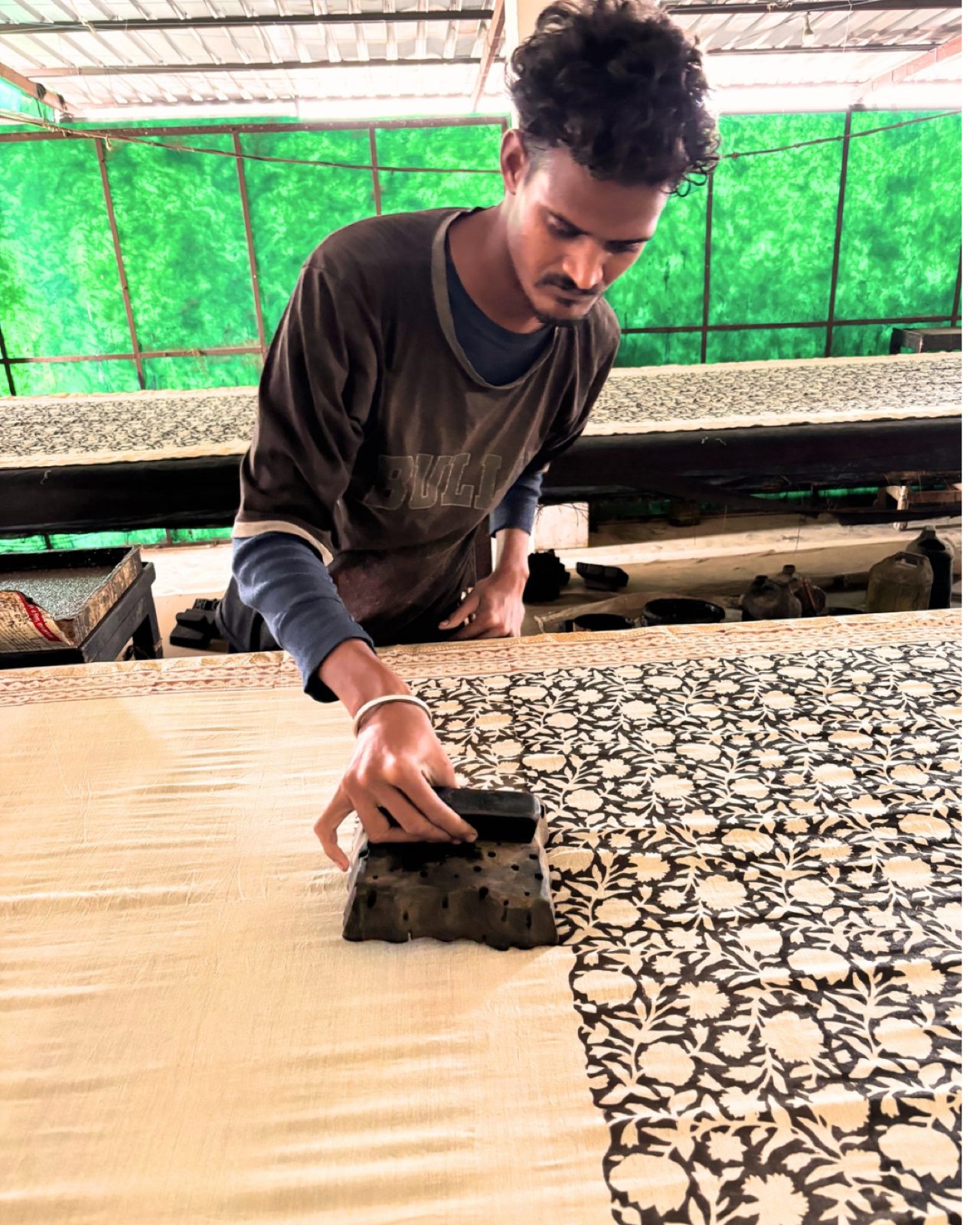
There are thousands of "block printed" dresses listed online in India right now. Most of them are not hand block printed. Some use machine stamps. Some use screen printing with a hand-drawn texture.
If you've ever ordered something that looked incredible in photos and arrived looking flat and generic, this is why.
This guide is about what to actually look for — in fabric, in print quality, in brand transparency — before you spend money on a hand block printed cotton dress in India.
What "Hand Block Printed" Actually Means
Hand block printing is a centuries old printing technique. A carved wooden block, typically teak or sheesham is dipped in natural or AZO-free dye and pressed onto fabric by hand, one impression at a time.
Each block press is done by a craftsperson called achhapai karigar. For a single metre of fabric, this can mean hundreds of individual impressions, each requiring steady pressure, exact alignment, and years of practice to get right.
This is why genuine hand block printed fabric has:
- Slight irregularities in the repeat — the pattern doesn't tile with machine precision
- A softer colour depth — dye sits in the fabric differently than it does on screen prints
- A reverse side that shows faint colour — because the dye actually penetrates the weave
It also takes significantly longer depending on number of blocks used for printing one complete motif and costs more to produce than machine-printed alternatives. That cost difference is real, and it flows directly to the artisan doing the work.
The Fabric Question: Why Cotton Matters
Block printing works best on natural, breathable fabrics and pure cotton is the gold standard for a reason.
Cotton has an open weave that absorbs dye evenly, holds colour through washes, and breathes in Indian heat in a way that polyester and blended fabrics simply don't. A block printed dress in a polyester-cotton blend will feel different on the skin, fade faster, and pill after washing.
What to check before buying:
- Fabric composition — look for 100% cotton, not "cotton blend" or "cotton feel"
- GSM (grams per square metre) — for a dress meant for Indian summers, 100–130 GSM is ideal: lightweight but not translucent
- Weave type — mulmul and cambric are extremely light and floaty; poplin is more structured; choose based on the silhouette you want
A brand that's serious about its fabric will tell you the GSM, weave, and composition on the product page. If that information is missing, it's worth asking.
The Four Block Printing Traditions You'll Find in India
India has several regional block printing traditions, and they look and feel different from each other.
Bagru (Rajasthan) — Uses natural mud paste (calleddabu) as a resist before dyeing. Produces earthy tones like indigo, madder red, black. The prints tend to be geometric and dense. Jaipur and the surrounding villages are the centre of this tradition.
Sanganeri (Rajasthan) — Lighter, more delicate floral motifs on white or cream backgrounds. Often used for dress fabric and dupattas. Also centred around Jaipur.
Bagh (Madhya Pradesh) — Bold geometric patterns using natural dyes from plants and minerals. Known for its deep indigo and red on white or black backgrounds.
Ajrakh (Kutch / Sindh) — Intricate, symmetric geometric patterns using natural resist printing. Usually in deep indigo, madder, and black.
Each tradition has different motifs, colour palettes, and techniques. Knowing which one you're looking at helps you ask better questions and appreciate what went into making the garment.
What to Look For in a Brand
When shopping for hand block printed dresses online in India, the brand's transparency tells you a lot.
Good signs:
- They name the artisans or the village/cluster they work with
- They explain their dye process (natural dyes vs. AZO-free synthetic dyes)
- They show process photos or videos — actual block printing, not stock images
- They're honest about pricing and why things cost what they cost
- They don't run 50–70% "sale" discounts (that's a red flag for inflated MRP)
Red flags:
- "Handmade" claim with no explanation of what that means
- Very low prices with no explanation
- No fabric composition listed
- No information about where it's made or by whom
Slow fashion brands that work directly with artisans will almost always have more information, not less. Transparency is part of their value proposition.
Care for Hand Block Printed Cotton
A well-made hand block printed cotton dress can last years if cared for correctly.
- First wash: Always wash separately in cold water — slight dye release is normal in the first wash
- Subsequent washes: Cold water, gentle cycle or hand wash
- Detergent: Use mild detergent; avoid harsh chemicals that strip natural dyes
- Drying: Dry in shade, not direct sunlight — UV fades natural dyes faster than synthetic ones
- Ironing: Iron on reverse side at medium heat
The more you handle these clothes gently, the longer they hold their colour and their character.
Where to Start
If you're new to hand block printed cotton or you've been burned by low-quality imitations before, the safest move is to buy from a brand that makes things in small batches, works directly with artisans, and is willing to tell you exactly what you're paying for.
AtSerovey, everything is hand block printed in Jaipur in small batches with local karigar families. We use pure cotton, AZO-free dyes, and a made-to-order model so nothing sits in a warehouse unsold. No fake discounts. No pressure tactics. Just honest clothes.
Browse hand block printed cotton dresses — Serovey Collections
Frequently Asked Questions
Is hand block printed cotton washable?
Yes. Cold water, gentle wash, dry in shade. Avoid harsh detergents. The print holds well with proper care.
How do I know if a block print is genuine?
Look for slight natural variation in the pattern repeat, soft dye edges, and faint colour on the reverse of the fabric. Ask the brand about their printing process, a genuine brand will answer.
Are natural dyes better than synthetic?
Natural dyes have lower chemical impact and develop a beautiful patina over time. AZO-free synthetic dyes are a safe middle ground, safer than conventional synthetic dyes, more consistent in colour than natural dyes. Both are better than conventional chemical dyes.
Why is hand block printed cotton more expensive than regular printed fabric?
Because it's made by hand, slowly, by skilled artisans. A single dress can represent 2–4 hours of a karigar's work, not including the fabric prep and finishing. The price reflects that time.
Which Indian city is best known for block printing?
Jaipur, Rajasthan is the most prominent centre, particularly the traditions of Bagru and Sanganer. The city has hundreds of workshops, from large print houses to small family operations that have practiced the craft for generations.